Should you prepack a bundle or keep its products separate?
A fixed set becomes its own sellable unit. A virtual bundle draws on the stock of its components. Choose the structure that can keep the customer promise while preserving useful stock flexibility.
Decide what the product is before designing the offer
Customers sometimes buy two of your products together. Should you seal them in one package under a separate product code, or show a combination that takes each item from its existing stock when ordered? This is a product and operations decision. It changes what remains available for individual sale, how the order is assembled, and what happens when one component sells out. Bundle order count alone cannot answer it. First decide whether you are testing customers' interest in the pairing or establishing a repeatable product with its own packaging and delivery promise.
Noon's virtual bundle documentation describes a combination of existing seller products without making a new physical item or moving units into separate stock. The offer draws from each product's inventory. Zid's grouped product also draws stock from its components; its flexible bundle lets customers choose from merchant-defined options. These are descriptions of specific platform mechanisms, not a claim that their eligibility, fees, or fulfillment rules match. Check the option available to the Saudi account and fulfillment route you actually use. [1] [3]
A physical set changes the handoff. Noon's FBN packing guidance says a product sold as a set or bundle should be marked accordingly before it enters its fulfillment centers. A sealed set received as one sellable unit is not simultaneously two loose units available for separate orders in that location. Its contents, label, and packaging need to match the listing and the experience promised to the buyer. This is FBN packing guidance, not a universal rule for every marketplace or merchant warehouse. [2]
The scarce component sets the ceiling
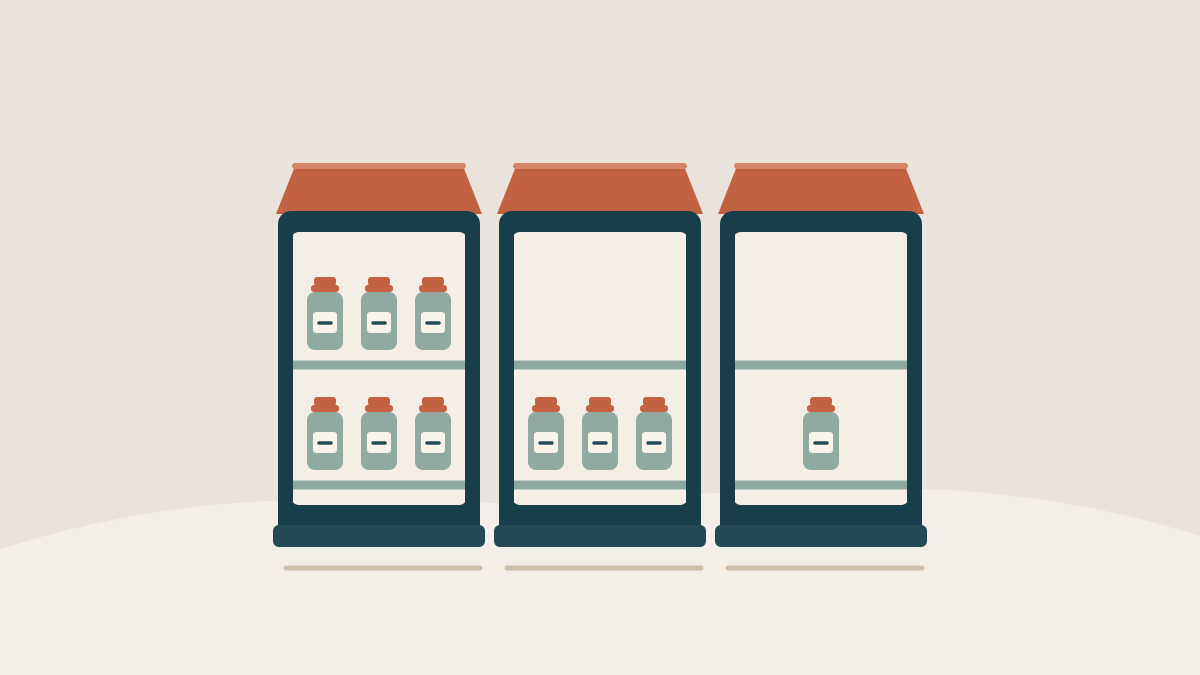
Suppose a merchant warehouse holds 60 units of a main product and 20 of a companion product. Each bundle needs one of each. On those numbers, the most combinations the current stock could make is 20. That is a ceiling, not a promise of 20 fulfilled orders. Components might sell separately, be reserved for open orders, or sit in a different fulfillment pool. Every quantity in this example is hypothetical arithmetic. It is not Saudi market evidence, a demand forecast, or a recommended purchasing level.
Now prepack 10 fixed sets. The example leaves 50 loose main units and 10 loose companion units. The brand has created an offer, not created more inventory. It has committed 10 units of each product to a different sellable unit. If the companion product sells out individually while bundles barely move, releasing those components may require unpacking and new preparation. If bundle demand rises, the ready sets may protect a consistent promise from competing individual orders. Actual time and cost depend on the warehouse, packing process, product, and fulfillment program.
The central tradeoff is when you surrender the ability to redirect a component. A virtual bundle leaves items in their original inventory until an order calls for the combination, but it can only be assembled when every required component is available in the relevant route. A physical set reserves the components early and can deliver a consistent presentation when packed well. It can also strand valuable units in a slow-moving set while the individual listing loses sales. The figure traces those units; it does not assume one system shares inventory across every channel. [1] [2]
10 ready sets, with no increase in total component units.
Hypothetical quantities in one warehouse: each set uses one of each product. These are not observed orders or a buying recommendation. Mechanism sources: noon Seller Help Center on virtual bundles and FBN set packing; Zid Help Center on grouped products.
When does the set deserve its own package?
Products appearing in the same basket are a starting clue, not proof that customers want a fixed set. Look at how the items are used together. Can the picture and description state exactly what is inside, including the quantity of each item? Can your team assemble the same contents and condition each time? A component that frequently runs short makes the combined promise fragile. Conversely, a protective shared pack or gift-ready presentation may have value beyond fewer clicks at checkout. Those are hypotheses to test against your own orders and customer feedback, not published findings about Saudi consumers.
Keep three questions separate during the test. Did the offer add orders, or move customers who would have bought the components individually? How often was the bundle unavailable because a single component was missing, and what happened to individual stock after allocation? Did assembly errors, complaints, or returns change? A returned physical set may not come back with every component in the same condition. Do not count it as a sellable bundle until the contents are checked. Our earlier article on returned units explains why receipt and sellable stock are different events.
There is also an opportunity cost. If the main product sells quickly alone, allocating many units to a set can constrain its direct demand. A slower companion may gain a useful trial from being paired with it. Yet a bundle will not fix a product that buyers do not want; it adds assembly work and a more complex promise. Review the specific channel's listing and packaging requirements before committing a large batch. An option in Noon's promotions center or Zid's product types does not establish what Amazon or another storefront permits. [1] [2] [3]
Test allocation before scaling the offer
Choose two complementary products and record the sellable quantity of each at the location that will fulfill the order. Test a small combination without diverting a large share of loose units. If the package itself matters to the customer, prepare a small fixed batch instead. Write down the decision rule before launch: evidence of additional demand, a dependable ability to complete the set, and no persistent confusion about its contents. Compare against individual sales over a comparable period, noting changes to advertising or price rather than attributing every difference to the bundle.
Watch which component stops the offer first. When demand is uncertain or both products sell briskly alone, keep allocation flexible and review availability before the next promotion. If the combination earns repeat demand and can be packed reliably, reserve a limited batch and measure the effect on individual orders. The next decision is where each unit serves a customer better, with a promise the operation can actually fulfill. That decision remains useful after the promotion ends because it tells you whether the pairing is a lasting product or a temporary way to learn.
Sources
- noon Seller Help Center: virtual bundles and component inventory
- noon Seller Help Center: FBN product packing guidelines
- Zid Help Center: grouped products and flexible bundles